
The provocative analogy comparing California’s cultural and political quirks to post-WWI France’s perceived “cowardice” hinges on a simple idea: Legacy Populations can be shaped by non-random selection pressures that skew their genetic makeup over generations.
In France, the trenches of World War I disproportionately killed the bravest and most fit young men, leaving a gene pool some early 20th-century thinkers argued was depleted of boldness. In California, waves of migration—from the Gold Rush dreamers to hippie utopians—attracted risk-takers, nonconformists, and those fleeing failure elsewhere, creating a founder population biased toward wanderlust, rebellion, and eccentricity.
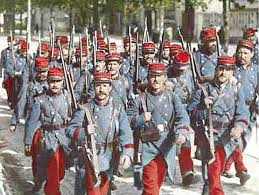
This isn’t just armchair speculation; it’s rooted in principles of population genetics, heritability, and historical selection biases.
First, consider the French parallel. World War I claimed about 1.4 million French military deaths, roughly 18% of mobilized men, mostly young and healthy. Early eugenicists like Alfred Ploetz and others warned of “dysgenic” effects: wars killing the physically and psychologically robust while sparing the unfit. Modern views dismiss the “cowardice” stereotype as propaganda tied to WWII’s rapid fall, but French troops in WWI showed remarkable tenacity despite horrific losses. Still, massive demographic disruption—collapsed fertility, lost generations—altered the population. No direct genetic evidence links this to reduced “bravery,” but the principle holds: differential mortality can shift trait frequencies if those traits are heritable.
Bravery, risk-taking, and related personality traits are indeed heritable. Twin studies estimate 40-60% heritability for Big Five dimensions like extraversion (linked to sensation-seeking) and low neuroticism (tied to resilience). Sensation-seeking, a proxy for boldness, shows around 60% heritability. If wars or other pressures selectively remove high-risk-takers, remaining populations could trend toward caution—though evidence for large-scale shifts in humans is indirect, drawn from evolutionary psychology models of coalitional aggression.
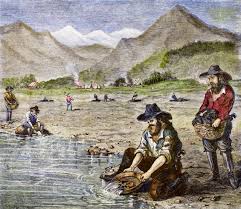
The California Gold Rush – Men with nowhere else to go.
California’s story flips the script: not depletion of the bold, but over-enrichment via migration selection and founder effects.
The 1848 Gold Rush triggered history’s largest peacetime migration, swelling California’s non-Native population from ~14,000 to over 300,000 by 1855. These “Forty-Niners” weren’t average folks—they were ambitious risk-takers willing to endure perilous journeys for quick riches. Many were young men seeking escape from stagnation or failure back East.
Later waves reinforced this: Dust Bowl refugees in the 1930s fleeing hardship; post-WWII boom seekers; and 1960s counterculture hippies chasing utopia in San Francisco’s Summer of Love.
In population genetics, such migrations create founder effects: small or selective groups establish new populations with skewed variant gene frequencies. If migrants self-select for high openness, extraversion, nonconformity, or impulsivity—traits heritable at 40-60%—the resulting gene pool amplifies those characteristics.
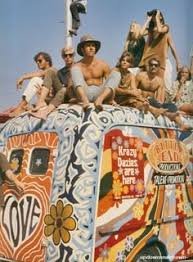
The Summer of Love and a future of non-achievement (1969)
California’s perpetual “final frontier” allure continues this pattern, drawing innovators, dreamers, and oddballs.
Is this “scientifically true”? More than partially. Let’s say about 45%.
Personality traits have substantial genetic components, and migration can bias populations (e.g., higher creativity in urban migrant hubs). Historical dysgenic war concerns influenced early eugenics, though modern genetics finds no clear population-level personality shifts from 20th-century wars. California’s eccentric reputation—progressive politics, tech utopianism, cultural experimentation—aligns anecdotally with a gene pool enriched for novelty-seeking.
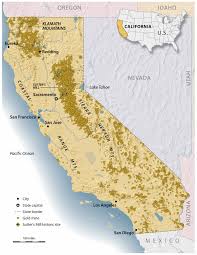
Still, culture, environment, and ongoing migration dominate. California’s vibe stems partially from its history as a land of reinvention and a few ruined genes. Science offers nuance and selection shapes populations, but there are variants.