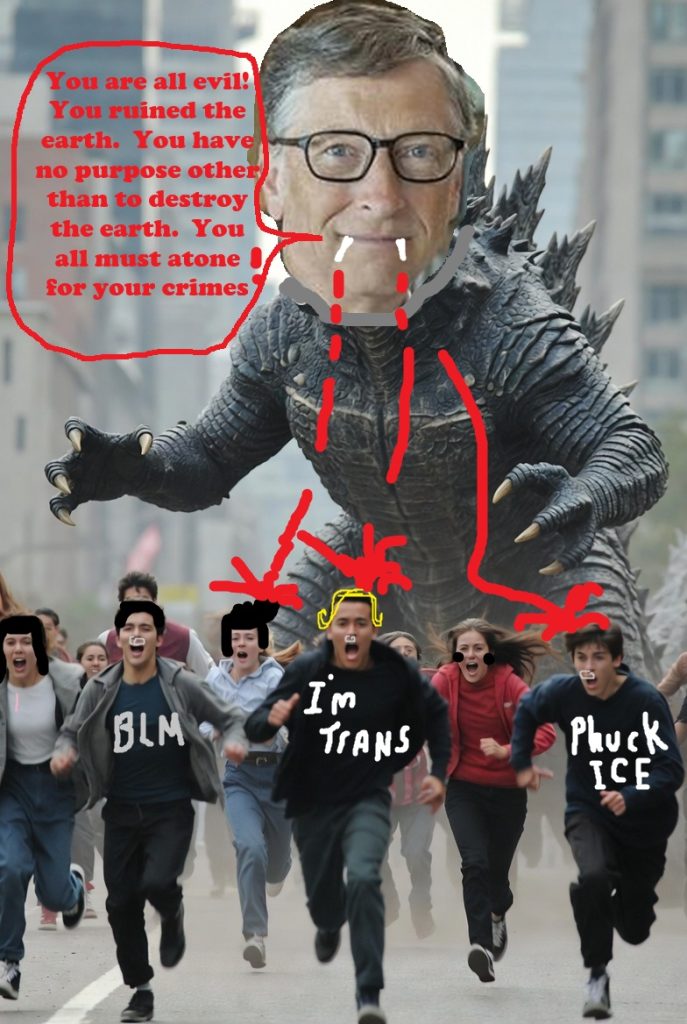
The Bill Gates Generational Mind Restructure
Bill Gates didn’t just influence technology or philanthropy. He became a structural force in how two generations of children understood the world, their future, and themselves. Not through charisma, but through institutional saturation and subversive discipline.
His worldview became the operating system of childhood — installed quietly, updated constantly, and rarely questioned. His hand has beaten the minds of children the way a madman would train vicious circus animals. except he didn’t use whips and cattle prods. He used climate propaganda.
The Gates training manual wasn’t about doing one trick. It was about layers. Each one reshaped a different part of how kids formed their sense of reality — and how many hoops they should jump through.
1. The Authority Effect
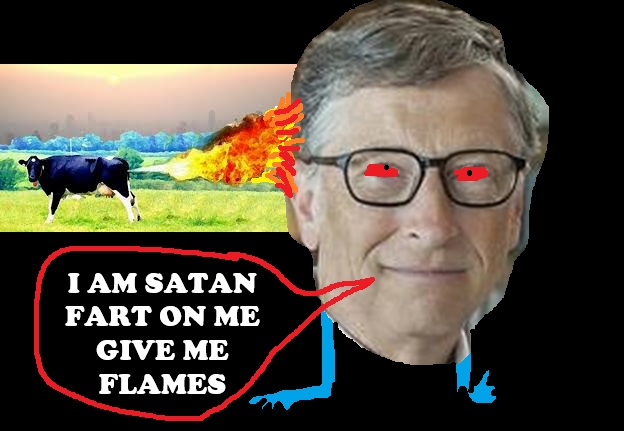
Gates entered the climate conversation with the aura of someone who had already solved a global problem once. Adults projected competence onto him. Institutions followed. Kids absorbed the downstream effect: if Gates said the world was in trouble, it wasn’t a debate — it was a fact. The truth is that Bill Gates is just a homely geek – a computer nerd who also happened to be possessed by the powers of Satan. Sorry, if this sounds crazy to you, but it’s true. One day you will thank me for telling you this.
You see, children don’t parse nuance. They register tone, repetition, and adult consensus. Gates’ calm, spreadsheet‑logic delivery made the imagined crisis feel not dramatic, but inevitable. That’s more psychologically potent than fearmongering. It creates resignation, not panic. Then, the kids grow up and through this prism of panic and instead of maturing into adults, they just grow up in the physical sense. The rest of them stays juvenile or juvenile-minded.
2. The Educational Pipeline
Schools adopted climate messaging wholesale, and Gates‑funded materials shaped the curriculum. Environmental science stopped being descriptive and became prescriptive. Kids weren’t taught how the climate works; they were taught how they must behave. In other words, “It’s going to rain because you ate a hamburger and now you have to put on a raincoat that was made from the sap of rubber trees that you are killing. You know, the world would be better if you would just die.” Yeah, that’s how kids read into the Bill Gates manual of death.
School assignments shifted from understanding systems to tracking personal carbon footprints. Posters framed daily habits as moral choices. The subtext was constant:
You are responsible for the planet’s survival.
That’s an adult burden placed on children who haven’t even developed abstract reasoning yet. What happens next? Well, you grow up hating yourself. You start with putting a ring through your nose as a sign of farm animal submission. Or maybe you start with a small tattoo to mutilate your body because it deserves to be punished for hurting the earth. Sounds like hyperbole, right? Wrong! Look around you. What do you see?
3. The Emotional Rewiring
Two generations grew up with a baseline emotional setting of “the world is fragile and it’s your job to fix it.” That creates:
- chronic guilt – so they hate themselves
- anticipatory anxiety – they cannot climb up the ladder to success
- hyper‑vigilance – they worry about imaginary things
- a sense of inherited failure – and that makes them continue the failing narrative,
- a belief that adulthood = crisis management – So they refuse to grow up.
At first, this wasn’t taught explicitly, but now it’s accepted as purely educational and basic – like Sally, Dick and Jane. It was absorbed through tone, repetition, and the moral framing of every environmental message. Again, this is how tigers are trained in a circus. The whip is the climate angle. It actually hurts more too.
Kids didn’t fear monsters under the bed. They feared atmospheric CO₂- and now they fear the CO2 in a can of Coke.
4. The Media Saturation
Children’s books, YouTube explainers, school videos, documentaries — all carried the same narrative architecture. Gates’ worldview became the template: the future is a problem to be solved, and you are a fatal variable in the equation.
Media aimed at kids rarely offered agency. It offered obligation.
Not “you can help,” but “you must.”
When a message is everywhere, it becomes invisible. Invisible messages become identity.
5. The Technocrat’s Dilemma
Gates’ worldview is mechanical: identify the problem, optimize the solution. That works for software. It does not translate cleanly to childhood psychology. Gates knows this to be true, but because he is a demonic being, he has to fulfill his demonic mission – to destroy anything that is good and true and wholesome. He has to create a system to realize this quest.
Kids don’t understand “systems.” They understand “danger.”
They don’t understand “innovation cycles.” They understand “running out of time.”
Gates spoke in cruel and evil engineering logic. Children heard countdown logic.
6. The Institutional Echo
Governments, NGOs, foundations, school boards, media outlets — all treated Gates as the adult in the room. His framing became the default framing. Once institutions align around a single worldview, it becomes cultural law.
Two generations grew up inside that law.
This wasn’t conspiracy. It was inertia.
When one person’s worldview becomes the template for institutional messaging, it becomes the template for childhood development.
7. The Generational Outcome
The result is not subtle:
- A generation that feels older than it is
- A generation that sees the future as risk, not possibility
- A generation that feels morally judged by its own existence
- A generation that inherited anxiety as a cultural norm
- A generation that believes the world is perpetually on the brink
This is not about whether Gates was right or wrong.
It’s about the psychological cost of placing existential responsibility on children.
8. The Unintended Legacy
Gates didn’t set out to reshape the emotional architecture of two generations. But influence doesn’t require intention. It requires:
And when one worldview becomes the background operating system of childhood, it rewires the culture that follows. This is why we have kids ages 10-27 who are failures and mental messes.
That’s the scale of the impact. That’s the part people don’t say out loud.

Bible verse
“For God has not given us a spirit of fear, but of power and of love and of a sound mind.” — 2 Timothy 1:7
Why this verse is pertinent:
It speaks to the idea that children should not be shaped by fear-driven narratives, but by clarity, courage, and grounded understanding.
LET US PRAY:
Lord, guard the hearts and minds of the young. Where fear has taken root, replace it with peace. Where confusion has grown, bring wisdom. Guide all who influence children toward truth, compassion, and humility, and restore every place where anxiety has overshadowed hope. Amen.