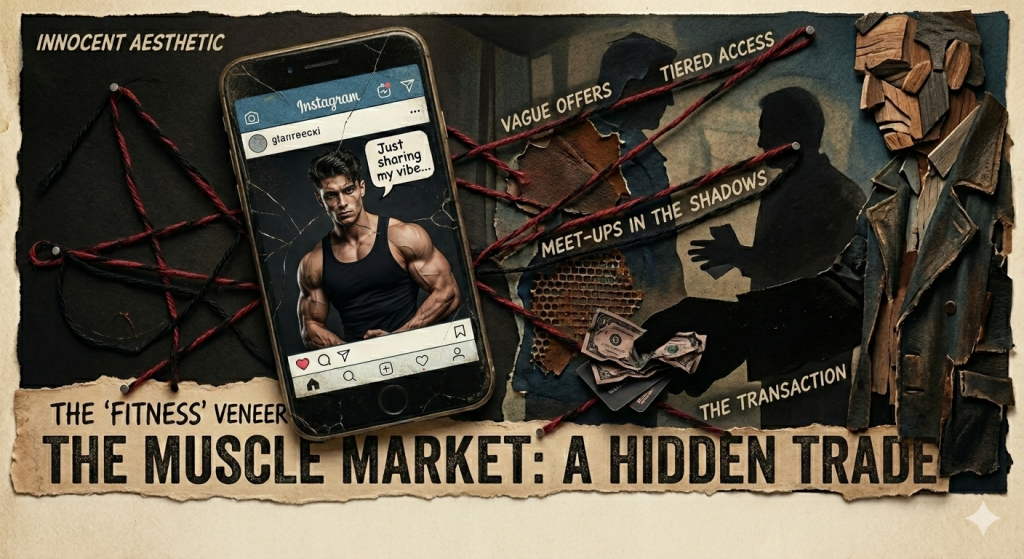
BY: Daiman Teer for TheSimpletonStar.com
It starts innocently enough—or so the algorithm wants you to believe. You’re scrolling through Facebook, looking for a birthday post from your aunt or a video of a golden retriever, and suddenly, there he is: a young man, shirtless, his skin glistening with enough baby oil to lubricate a semi-truck. He’s running a hand through sun-bleached tresses, flexing a bicep, and perhaps flashing a coy smile while “accidentally” revealing a perfectly sculpted physique.
To the casual observer, it’s just another “fitness influencer” sharing his journey. But look closer at the comments, and the “innocent beach-boy” aesthetic dissolves into the gritty reality of a digital meat market.
The Anatomy of the “Thirst Trap”
The “Muscle Market” on Facebook Reels is a calculated business model. These creators—often young, highly athletic, and hyper-aware of their appeal—aren’t posting these videos to find “young hot women.” They know exactly who their demographic is: middle-aged men with disposable income.
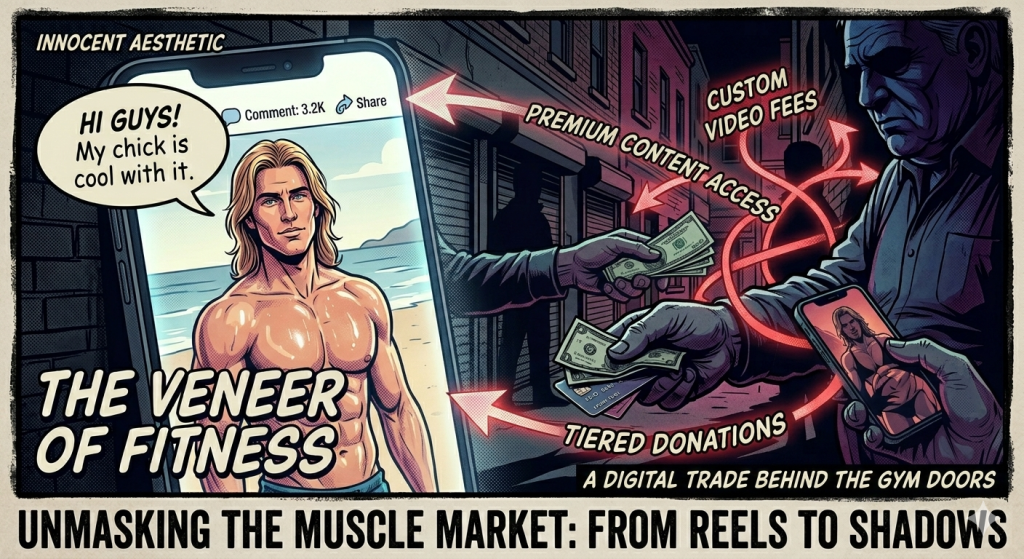
The comment sections are a sea of “Nice pecs, bro,” “Looking thick,” and “Check your DMs.” It is a thinly veiled marketplace. These “fitness” videos act as the top of a marketing funnel. The goal is to lure the viewer into a private conversation, which almost inevitably leads to a link for a subscription-based adult site or, more dangerously, “offline arrangements.”
The Algorithmic Blind Spot
Why does Meta allow it? Because these “muscle boys” stay just within the lines of the Terms of Service. As long as they are wearing gym shorts and technically “working out,” they aren’t flagged for sexual content. However, the intent is purely transactional. By exploiting the algorithm’s love for skin and the human brain’s craving for dopamine, these creators have turned Facebook into a virtual street corner.
The Danger in the Shadows
There is a profound risk on both sides of this screen. For the young men, it’s a gateway into a world of “gray market” sex work that lacks the safety protocols of established platforms. They risk extortion, physical harm during meetups, and the permanent digital “stain” of their actions. For the men commenting, they are often walking into “sextortion” traps, where “bots” or managers posing as the young men record their private interactions to blackmail them later.
What looks like a harmless vanity project is actually a sophisticated, often exploitative economy. The “Muscle Market” isn’t about fitness; it’s about the oldest trade in the world, repackaged for a thumb-scrolling generation. It’s time we call it what it is: a digital red light district operating in broad daylight.
A BRIEF OVERVIEW OF MUSCLE CULTURE and MALE PROSTITUTION
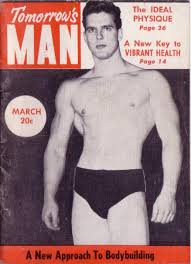
The intersection of physical culture and “the oldest profession” isn’t a modern glitch in the Facebook algorithm; it is a historical cycle that has simply found a new medium. In the late 19th and early 20th centuries, the “Strongman” era provided the first socially acceptable cover.
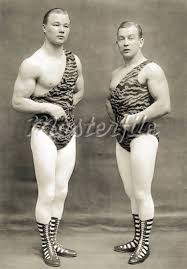
Figures like Eugen Sandow sold photographs of their nearly nude, classical physiques under the guise of “physical education” and “health.” While the public celebrated these men as paragons of strength, a shadow market existed where these same photographs—and the men in them—were available for a price to wealthy male patrons who frequented the same gymnasiums and private clubs where “body culture” was celebrated.
By the mid-20th century, this evolved into the “Physique Magazine” era. Publications like Physique Pictorial bypassed strict obscenity laws by claiming to be artistic studies of the human form or athletic catalogs.
These magazines were the 1950s version of a Facebook Reel—they featured young, muscular men in “innocent” outdoor settings, often with sun-bleached hair and athletic poses. Behind the scenes, these magazines served as a directory; the “models” were frequently available for private bookings, and the advertisements for “personal training” or “private posing sessions” were the “Check your DMs” of their day. Whether it’s a black-and-white fitness pamphlet from 1920 or a high-definition video in 2026, the strategy remains the same: use the veneer of health and vanity to mask a transactional reality.

The Scripture
“For all that is in the world—the lust of the flesh, the lust of the eyes, and the pride of life—is not of the Father but is of the world.” — 1 John 2:16
Why I chose this verse: This passage perfectly captures the three pillars of the “Muscle Market.” The “lust of the flesh” and “lust of the eyes” drive the viewers to seek out these videos, while the “pride of life” (the vanity of the creator) provides the content. It serves as a reminder that these digital distractions are designed to tether us to worldly desires rather than higher spiritual truths.
A Brief Prayer
Heavenly Father, we ask for discernment in a world that often masks darkness as light. Protect the young from the lure of easy money and the vanity that leads to exploitation, and guard the hearts of those seeking connection in empty places. Grant us the strength to turn our eyes away from worthlessness and find our true value in Your grace. Amen.