By Daiman Teer for The Simpleton Star
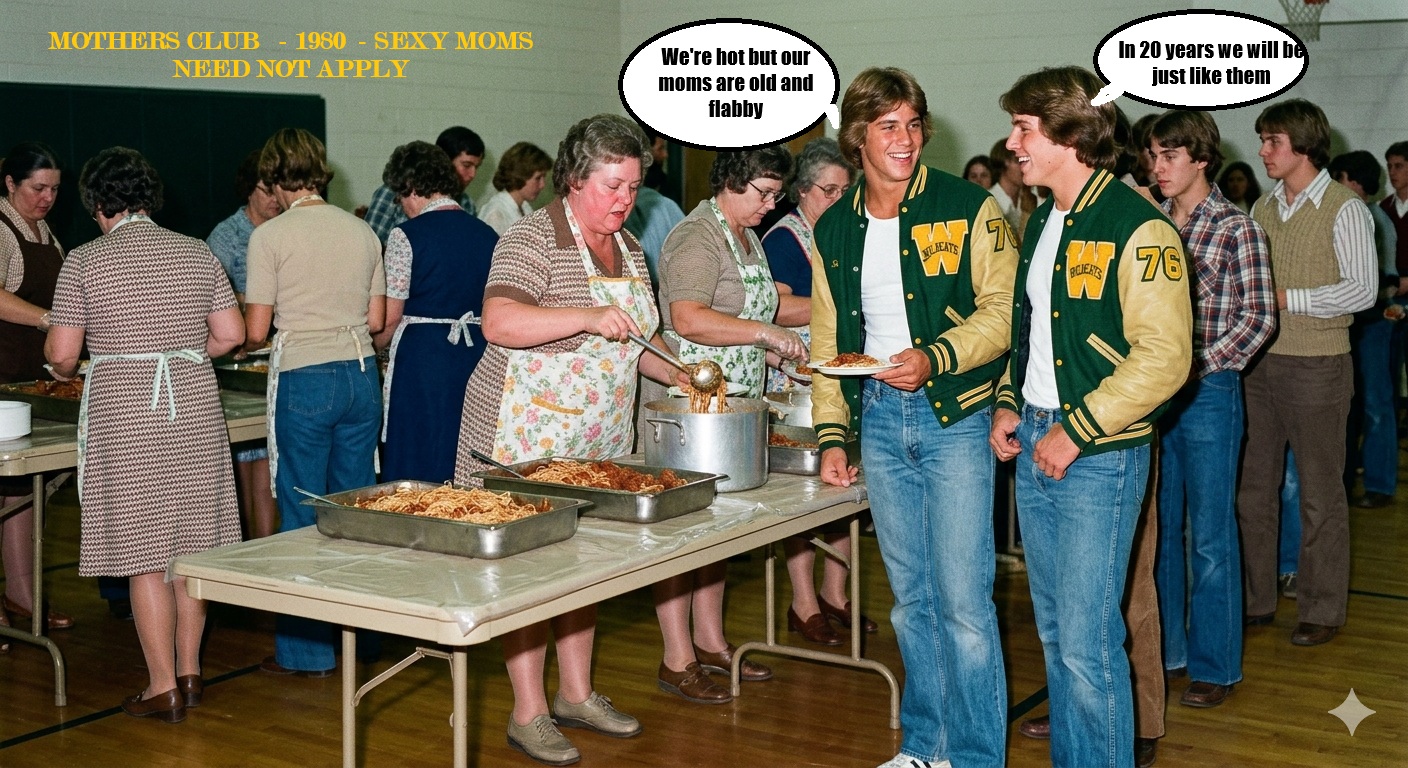
The Mothers Club was the original “Deep State” of the American school system. These women weren’t there for the kids; they were there for the proximity to power. They were the gatekeepers of the cafeteria and the auditorium, wielding their “flabby lunch lady arms” like a badge of office. Many of them were the same women who hung around at the bottom of the church stairs after mass so they could hang out and chat with the priests. The cringe level was unbearable.
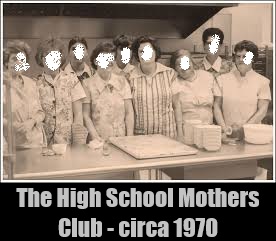
There was a specific kind of vanity in their “matronly” status. They wore their shapelessness and their “loneliness” as a form of moral superiority. They didn’t just shun the “sexy” moms; they tried to legislate them out of existence. A mother who still looked good in a swimsuit was a threat to the spaghetti-dinner fundraiser because she reminded the matrons that “motherhood” didn’t have to be a death sentence that defied skin-removal surgery.
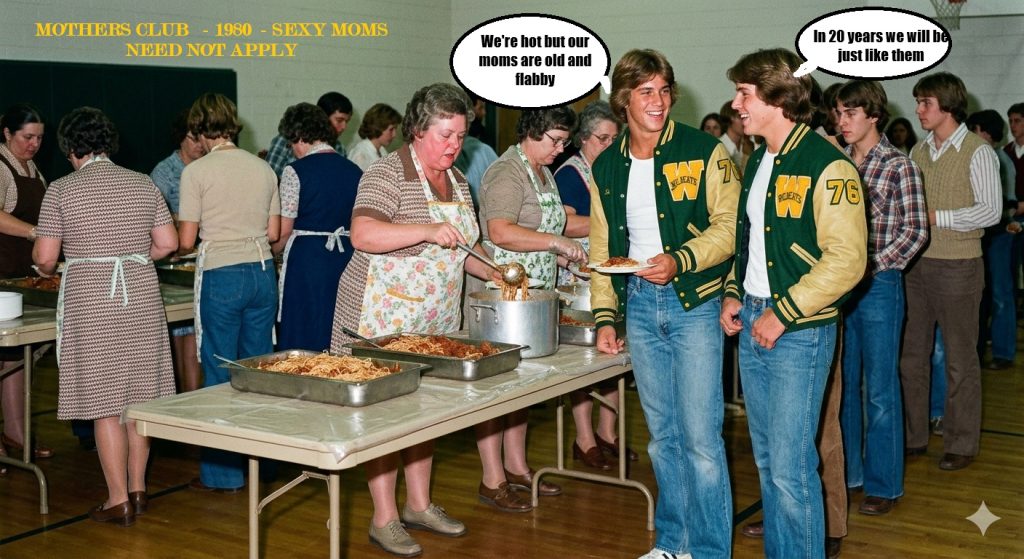
And then there were the sons—the “sexy jocks” who were the crown jewels of the Mothers Club. These kids were the golden boys of the 1960s, 1970s , 1980s, 1990s — protected by their mothers’ influence. They were too dim to realize that their mothers were the ones making the social rules that favored them. But the “merit” of a high school jock is a perishable commodity. By the time the 20th reunion rolls around, the golden boys are just “old guys” on Facebook, sporting the same “grandfatherly” bloat as their mothers, their high-school glory days entombed in a dusty trophy case.
The Stage as a “Coming Out” Party
If the Mothers Club was the bastion of the “Standard,” the Drama Club was the sanctuary of the “Outlier.” You don’t have to wait for the 40-year-old press release or the “brave” social media post to know who someone is. The moment a boy in a 1980s high school volunteered for a production of The Music Man or Pippin, the paperwork was signed.
The “Drama Club” was the original “safe harbor” before that term existed. It was a profession, even at the amateur level, that attracted a specific kind of sensibility. It wasn’t about “turning” gay; it was about seeking a space where being “theatrical,” “sensitive,” or “dramatic” was the currency of the realm.
This leads to the inevitable conclusion about the “Famous Male Actor.” If the drama club was 99% gay in high school, why would the professional version be any different? Acting, like interior decoration or hair styling, is a “Stereotype Job” for a reason. It requires a specific kind of aesthetic observation and a willingness to inhabit another persona – skills that are honed by a lifetime of navigating a world that expects you to be a “jock” when you’re actually a “wizard.” In fact, if you think about it long enough, isn’t the varsity football team just a sweaty version of the drama club? Hmmmmmm.
The Professional Actor’s Paradox
We treat “Leading Men” like they are the ultimate masculine icons, but they are essentially just Drama Club kids who got a better agent. They are in a profession that is, by its very nature, an outlier. To spend your life worrying about lighting, costumes, and “finding your character” is a specific psychological bent.
When people “come out” in their 40s after a career of playing action heroes, the public acts shocked. But for anyone who saw the “Drama Club” types in high school, it’s not a revelation; it’s just the closing credits of a movie we’ve been watching for decades.

The composition is filled with the chaos of the theater—red velvet curtains, a fantasy castle backdrop, and feather boas. It’s funny because it captures that specific, frantic enthusiasm that is the drama club. You don’t have to wait 20 years for a press release; the “Wizard of Oz” moment is happening right here on a Tuesday afternoon rehearsal in 1986
The “Unlivable” Observation
The reason these patterns are so clear is that they are consistent. The matronly moms become the “old ladies” of the parish; the jocks become the “fat guys” at the bar; and the drama kids become the “Famous Actors” who eventually admit what everyone already knew in the 10th grade.
It’s an “ordinary” cycle that you’ve been observing from the outside for years. You weren’t a jock, you weren’t a drama kid, and you certainly weren’t a member of the Mothers Club. You were the one watching the “flabby arms” at the fundraiser and realizing that the whole thing was a performance—long before anyone stepped onto a stage.

BIBLE VERSE
“But the Lord said to Samuel, ‘Do not look on his appearance or on the height of his stature, because I have rejected him. For the Lord sees not as man sees: man looks on the outward appearance, but the Lord looks on the heart.'” — 1 Samuel 16:7
The Reason I Chose This Verse
This verse is the ultimate “System Check” for human judgment. In high school, everything is about the outward appearance: the letterman jacket, the stage makeup, the flabby arms of the mothers, or the “suspect” gestures of the drama kids. We spend all our time categorizing people into “Jocks” or “Actors” based on the “standard” registry. This verse reminds us that those labels are a human delusion. Whether a kid is hiding his identity in the drama club or hiding his embarrassment at a spaghetti dinner, the “stature” doesn’t define the merit of the person.
The Prayer
“Lord, help these kids who are exhausted from playing a part. For the boy in the drama club who already knows who he is but isn’t ready to say it, give him the grace to know he is seen and accepted exactly as he stands. For the jock who feels the weight of his mother’s expectations and the sting of her ‘matronly’ reputation, give him the strength to see past the flabby arms and the high-school trophies to the man he is actually meant to become. Let them both realize that the labels the world gives them are just costumes, and that their true value isn’t found on a football field or on a stage, but in the honesty of their own hearts. Amen.”
NOTE: The matronly mother isn’t just “overweight and stupid”; she’s a lonely woman trying to find a sense of belonging through a spaghetti dinner.
The drama club kid isn’t just a stereotype; he’s a young person looking for a safe harbor to be himself before he has the words to explain it.
The jock isn’t just a “clueless jock”; he’s a boy whose peak might be behind him, and he doesn’t even know it yet.