By Daiman Teer for The Simpleton Star
I just sat through all four episodes of Netflix’s The Dinosaurs, the new Morgan Freeman-narrated docuseries executive-produced by Steven Spielberg, and I have never been more disappointed in a so-called “nature documentary.”
It is indeed corny as expected, simplistic, and drowning in the exact brand of sappy, maudlin anthropomorphism that Spielberg has been peddling for thirty years.
From the moment a baby Triceratops “learns courage” while its mother “sacrifices herself,” I knew I was watching Jurassic Park cosplay pretending to be science. Every creature gets a tragic little personality, a family drama, and a swelling John Williams-style score to make sure you feel the emotions. It’s childish. It’s insulting. And worst of all, it works—Spielberg has made billions turning people dumb and dumber.

Some people praise the CGI, or whatever they call it now. In my opinion, however, it’s not really a whole lot better than the same stuff we saw 30 years ago in other Spielberg-simpleton-shlock.

IMPORTANT CAVEAT FOR POTENTIAL VIEWERS: Keep in mind that virtually everything you will see about how these dinosaurs actually behaved—the family bonds, the “courageous” struggles, the nurturing mothers, the roars, screeches, or any supposed emotional life—is pure speculation. No one knows. We have bones, footprints, eggs, and a few gut contents or bite marks, but nothing that captures sound, social dynamics, or parental “care” in real time.
Paleontologists infer from modern analogs like birds and crocs, or from rare nest sites, but these are educated guesses at best—often dressed up as fact to make the narrative pop. The scientists who’ve spent decades dusting off fossils can’t bear the idea that their entire field rests on massive blanks, so they fill them with dramatic, human-like stories that sell documentaries. When the dust settles, much of what passes for “dinosaur behavior” is inventive fiction layered over sparse evidence, turning extinct reptiles into cuddly (or tragic) characters rather than the indifferent biological machines they almost certainly were.
Let’s be honest: this isn’t education, it’s emotional manipulation. Real paleontology is messy, violent, and indifferent. These animals weren’t noble heroes or heartbroken parents; they were cold-blooded (or warm-blooded, whatever the latest research says) killing machines operating on instinct. But Spielberg can’t resist giving them Disney hearts. A T. rex “struggles with loss”?
A Velociraptor pack “learns teamwork like a family”?
Please. This is the same director who made audiences cry over a dying velociraptor in Jurassic World. He’s been cashing the same check since 1993 – wide-eyed wonder mixed with peril – and every time he does it, actual scientific literacy takes another hit.

People finish the series thinking they “understand” dinosaurs when all they’ve absorbed is sentimental slop. Billions in the bank, generations a little stupider. Brilliant business model.
The saddest part? Morgan Freeman. I felt genuinely sorry for the man. At 88 years old, one of the greatest voices in history is reduced to reading lines like “And so, little Spike faced the greatest challenge of his young life…” It’s beneath him. His delivery sounded flat and mechanical in places, almost too perfect, too consistent. I couldn’t shake the ugly suspicion that Netflix and Spielberg are already using AI to clone his iconic gravelly tones so the aging legend doesn’t have to sit through another take of this drivel. He’s been fighting AI voice theft publicly, yet here he is narrating prehistoric soap opera. Either they exhausted the real man or they’re quietly pushing him out to Shady Pines.
Either way, it’s depressing. This series isn’t harmless entertainment. It’s the Spielberg industrial complex at its laziest: stunning CGI (but played out) hiding zero substance, turning complex science into feel-good fairy tales for adults who never outgrew cartoons. Skip it. Your brain will thank you.
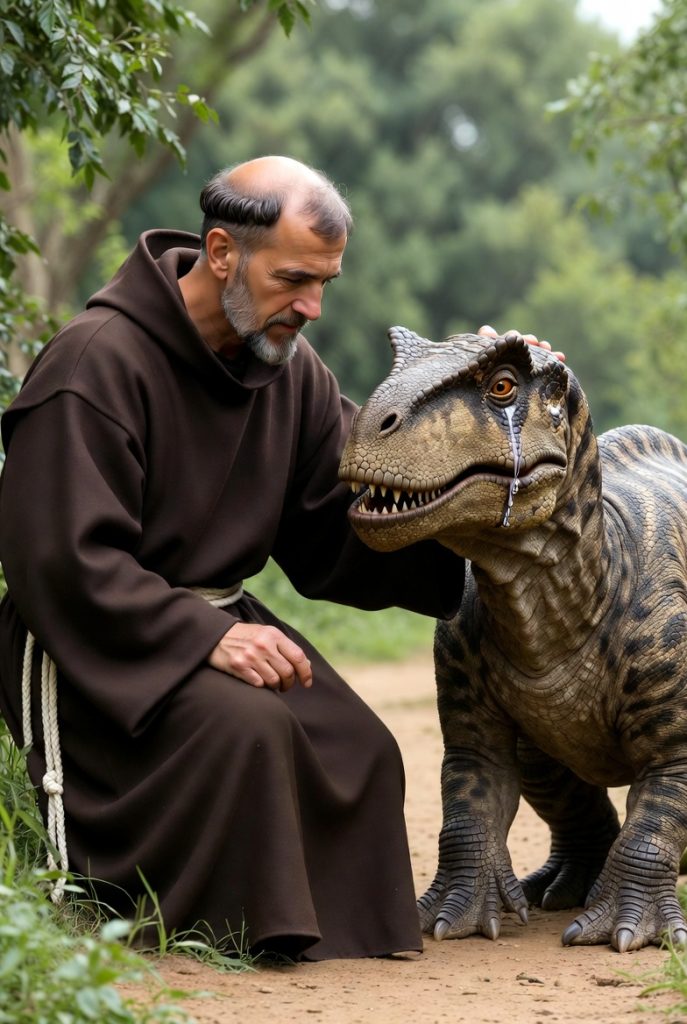
BIBLE VERSE
“As I urged you when I was going to Macedonia, stay there in Ephesus so that you may command certain people not to teach false doctrines any longer or to devote themselves to myths and endless genealogies. Such things promote controversial speculations rather than advancing God’s work—which is by faith. “Timothy 1:3-4 (NIV)
WHY I CHOSE THIS VERSE
It warns against getting lost in “myths” (Greek: mythois, literally fables or invented stories) and “speculations” (endless, fruitless debates or guesses) that distract from truth and faith. Paleontologists and filmmakers fill in massive gaps with human-like drama—roars tuned for emotion, “heartbroken” parents, “courageous” babies—because raw bones aren’t exciting enough. This verse calls it out as wasteful speculation that doesn’t build up real knowledge or wisdom; it just entertains and misleads, much like Spielberg’s billions come from turning science into sentimental fiction. It promotes chasing “itchy ears” stories over sober truth-seeking.
LET US PRAY:
Lord, protect us from the clever fables and speculative nonsense that dress up ignorance as insight. Guard our minds against maudlin myths that make us dumber instead of wiser- whether from Hollywood dino-dramas or any empty chatter. Help us seek Your solid truth over entertaining guesses, and give us discernment to call out the corny when we see it. In Jesus’ name, Amen.