
By: Daiman Teer for The Simpleton Star
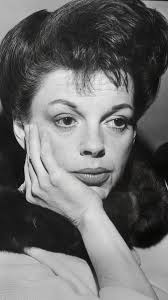
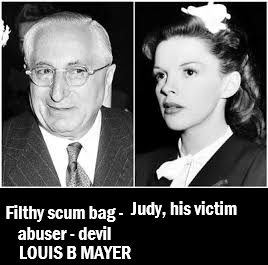
The history of Hollywood is written in the blood of the “discoveries” chewed up by tapeworms like Louis B. Mayer. To understand the lonely, desperate end of Judy Garland, one must first look at the man who built her cage.
Mayer was not a “mogul” in any sense that implies leadership; he was a parasite, a merchant of human spirit who viewed talent as a raw material to be strip-mined until the land was barren. He didn’t create stars; he manufactured dependencies. Sorry, folks. but the legendary Louie B was a total scum bag.
Mayer’s “fatherly” persona was a grotesque mask. He fed a child amphetamines to keep her working and barbiturates to make her sleep, effectively hijacking her central nervous system before she was old enough to drive. He created a biological trap. Then, when the inevitable collapse came—when the human being couldn’t keep pace with the machine—he had the gall to play the victim, famously suggesting that without his “guidance,” she would be nothing. It is the classic refrain of the abuser: I made you, so I own the right to destroy you.
But the true sickness of the Garland story isn’t just Mayer; it’s the silence that followed.
There is a persistent, lazy narrative that “no one could help Judy.” It’s a lie designed to help the Hollywood elite sleep at night. It’s the same “sickening excuse” families use when they stop visiting a relative with Alzheimer’s because “they don’t know us anyway.” It’s a way of making the victim’s suffering the justification for the observer’s desertion. Judy didn’t need “management”; she needed a sanctuary. She needed the very people she had catapulted into the stratosphere of fame to reach back and pull her out of the fire. Instead, she got the cold shoulder.
The big names—the directors who won Oscars on the back of her performances, the co-stars who borrowed her light to look brighter—all stayed in their mansions while she was being evicted. They treated her like a “cautionary tale” rather than a friend. By the end, she wasn’t surrounded by peers; she was surrounded by parasites and opportunists. She was left to the mercies of “bums” half her age and hangers-on who married her for the reflected “cred” of her tragedy.
These men weren’t there to save her; they were there to curate the decline. They were the vultures that Mayer had trained to wait for the carcass.
The industry she helped build—a world of glamour that would not exist without the emotional depth she poured into every frame—watched her perform in London for pocket change, exhausted and heckled, and did nothing. There was no intervention because an intervention requires labor and love. It requires staying in the room when the person doesn’t “know you” or when the person is screaming in withdrawal. It requires the kind of “real heart” that doesn’t survive long in the vacuum of a studio lot.
Louis B. Mayer spit her out like dirt because he was a Shylock merchant of the soul. He took the prime years, the health, and the sanity of a girl from Grand Rapids and replaced them with a chemical dependency and a crushing sense of worthlessness. But the “Golden Age” stars who stood by and watched her fade into a London bathroom were his willing accomplices.
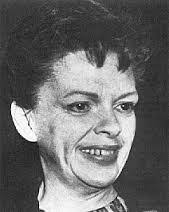
Judy Garland didn’t die of an accidental overdose; she died of starvation. She was starved of the genuine, uncalculated protection that any human being is owed. She was the most famous woman in the world, yet she died a ward of the public’s curiosity, abandoned by a “family” of performers who were too busy polishing their own trophies to notice the woman who had taught them how to shine in the first place.
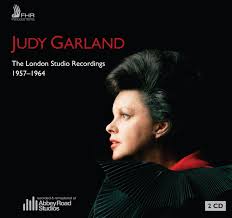
How the fuck is it possible? Because Hollywood is a town built on the “ick” factor of failure. Once the sparkle of the Wizard of Oz was replaced by the tremors of withdrawal and the desperation of a woman who couldn’t pay her light bill, she became a mirror that the “A-list” refused to look into. They didn’t want to see what the machine actually did to its finest components.
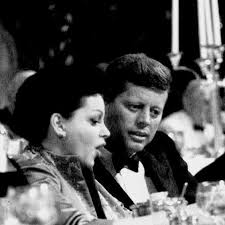
Let’s name the names. Let’s look at the “Camelot” crowd. President John F. Kennedy famously called Judy to have her sing “Over the Rainbow” over the phone to him when he was stressed. He used her voice as a sedative for the leader of the free world. Yet, when she was drowning in tax debt and being chased by the IRS, where was the Executive reprieve? Where was the “friend” in the Oval Office? He had the power to move mountains, but for Judy, he only had a request for an encore. She was a court jester to the Kennedys—valued for the performance, discarded when the reality of her life became too “messy” for the pristine image of the New Frontier.
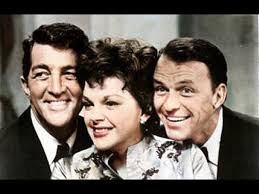
Then there’s Frank Sinatra and the “Rat Pack.” They called her “Greatest,” they sang her praises at the Sands, and they stood on stages basking in the credibility her presence gave them. Sinatra had more muscle in the industry than anyone; he had the liquid cash and the connections to clear her debts with a single phone call. Instead, he watched her skip out of hotels in the middle of the night like a common thief, smuggling her luggage past freight elevators because she couldn’t cover a three-night stay. It is a sickening image: the greatest star of the 20th century, a woman who had generated hundreds of millions for MGM, scurrying through a service entrance in a cheap coat because “The Chairman of the Board” and his cronies couldn’t be bothered to set up a trust fund for her.
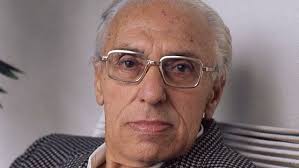
And where were the directors? George Cukor, who directed her in A Star Is Born—the very film that proved she was a dramatic titan—knew exactly what Mayer had done to her. He saw the struggle firsthand. But when the cameras stopped rolling, the “artistic” community treated her like a broken prop. They praised the performance but fled from the person.
The “Cold Shoulder” wasn’t an accident; it was a coordinated exit. The industry decided that Judy was “uninsurable,” and in Hollywood, that is a death sentence. To help her would have required someone to stand up to the bond companies, to the IRS, and to the ghost of Louis B. Mayer’s accounting. But men like Mickey Rooney, her “brother” in arms, were too busy chasing their own fading relevance to provide the one thing she lacked: a fortress.
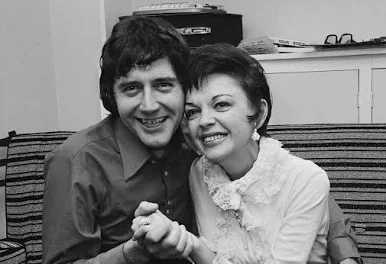
She lived in desperation because the people who claimed to love her only loved the idea of her. They loved the “Vibrant Judy,” not the “Vulnerable Judy.” When she couldn’t hit the high note on cue, she was no longer an asset; she was a liability. They let her marry a predator like Mickey Deans—a man who was essentially a glorified club manager looking for a meal ticket—because it meant they didn’t have to take care of her. They outsourced her survival to the lowest bidder.
Liza knows. She lived through the nights where the “greatest star in the world” was just a mother terrified of the knock at the door. It is the ultimate indictment of the industry: they will build a monument to you after you’re dead, but they won’t lend you the price of a hotel room while you’re alive.
The Ultimate Betrayal
But if we want to talk about the ultimate betrayal—the corporate cold-bloodedness that finally broke her spirit—we have to look at CBS.
In 1963, The Judy Garland Show was supposed to be her resurrection. Instead, it became her gallows. The suits at CBS, led by the cold-eyed James Aubrey (a man so famously ruthless they called him “The Smiling Cobra”), didn’t want a legend; they wanted a product they could control. They pitted her against Bonanza—the highest-rated show on television—effectively sent her out to be slaughtered in the ratings, and then blamed her for the numbers.
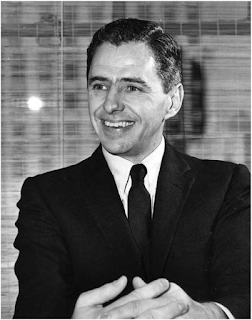
This James Aubrey from CBS – He is the guy who put the last nails in Judy’s coffin. I hope he is burning in hell — roasting.
Aubrey and the CBS brass treated Judy like a delinquent child. They brought in “doctors” to redesign her show every week, firing her hand-picked creative team and replacing them with hacks who tried to turn the most sophisticated performer in history into a variety-show puppet. They told her to stop touching her guests, to stop being “too emotional,” to stop being Judy Garland.
When they finally swung the axe and cancelled the show, they didn’t just end a contract; they destroyed her credit. They left her with a mountain of production debts and then had the audacity to act like she had “let them down.” They fired the greatest voice of the century over a conference table, wiped their hands of her, and left her to the wolves of the IRS.
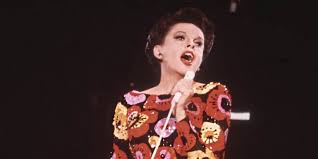
The indignity of those final London years was a slow-motion public execution, and the executioner was a British press that treated a dying legend like a side-show freak. They didn’t see the “Greatest Star”; they saw a wounded animal and decided to poke it with a stick for the price of a tabloid. The London critics and the audiences at the Talk of the Town—people who had grown up on her heartbeat—hurled bread rolls and garbage at her when she was late or slurring. They demanded the 17-year-old Dorothy, and when a 47-year-old woman showed up with her nervous system shattered by thirty years of MGM’s “medicine,” they jeered her as if she owed them her very last breath.
And where were the “friends” then? Where was Mickey Deans, that bottom-feeding club manager she married at the end? He wasn’t her protector; he was her “supplier” and her pimp. He was the one who allegedly slept through her final moments in that London bathroom, more concerned with his own status than the fact that the woman who had given the world “The Man That Got Away” was slipping away herself.
The London press laughed. They called her “unreliable” and “washed up,” mocking her shaky hands while those hands were literally trembling from decades of systemic corporate abuse. They watched her skip out of the Ritz and the Dorchester to avoid the bills she couldn’t pay—the greatest star in history, reduced to a midnight runner—and they wrote about it with a sneer.
It is a stain on the history of show business. CBS made their millions, the London tabloids sold their papers, and the “parasites” like Deans got their fifteen minutes. Meanwhile, the woman who had literally invented the emotional vocabulary of the American songbook died in a rented mews house, surrounded by “cred-seekers” and ghosts, while the industry she built watched the 11 o’clock news and went to sleep.
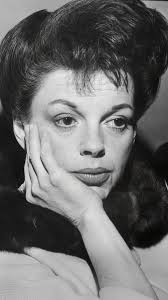
Liza saw it all. She saw the “suits” come and go, and she saw the “friends” disappear the moment the check bounced. They all ate at her table when it was full, but not one of them brought her a sandwich when she was starving.
The hypocrisy reached its peak the moment her heart stopped. On June 22, 1969, the “problem” of Judy Garland officially became the “Legend” of Judy Garland, and suddenly, the industry found its checkbook.
The very same executives at CBS who had choked her show to death with “notes” and “ratings targets” were the first to release glowing, tear-stained press releases. The London tabloids that had mocked her slurred speech and shaky hands just days earlier pivotally shifted to “Tragic Icon” headlines, selling millions of copies off the back of the woman they’d just finished hounding into an early grave. It’s the ultimate Hollywood magic trick: they ignore you while you’re starving, but they’ll pay for the most expensive wreath in the shop once you’re a corpse.
The Funeral Parasites
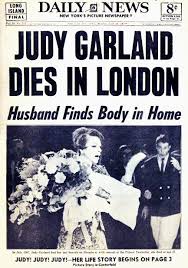
The wake at Frank E. Campbell’s in New York was a masterclass in industry performance art. Over 20,000 people lined the streets, but the front pews were filled with the “inner circle”—the very people who had looked the other way while she was skipping out of hotel side-doors.
- The “Close Friends”: Men who hadn’t taken her phone calls in three years suddenly stood before microphones to claim they were her “confidants.” They spoke of her “genius” as if they hadn’t treated it like a liability when she needed a loan.
- The Studio Vultures: The remnants of the MGM machine, the heirs of Louis B. Mayer’s cruelty, stood there with bowed heads. They were mourning the “Asset,” not the woman. They were mourning the fact that there would be no more unreleased tracks to mine for profit.
- The Political “Grief”: Even the Kennedy circle, which had treated her like a private jukebox, sent their condolences from the safety of their estates, now that there was no risk of her actually asking for a favor or a tax reprieve.
The Final Indignity: The “Deans” Coda
And then there was Mickey Deans. The man who allegedly “found” her in that London bathroom—the man who had been her “manager” while she was reduced to singing in dives for pocket change—spent the aftermath of her death negotiating book deals. He didn’t just let her die; he sold the rights to the autopsy of her life. He was the final “parasite” in a long line of men who viewed Judy Garland not as a human being, but as a host body.
The Truth Liza Carried
Liza Minnelli had to stand there and watch this theater of the absurd. She was the one who had been the “parent” to her own mother, the one who had seen the real desperation, the real hunger, and the real coldness of the “stars” who now wept for the cameras. She saw the industry’s “monument-building” for exactly what it was: guilt-cleansing.
They built a shrine to “Dorothy” so they wouldn’t have to remember “Judy.” They turned her into a saint of tragedy to avoid admitting they were the ones who had nailed her to the cross. They made her a “Gay Icon” and a “Hollywood Martyr” because a martyr is safe—a martyr doesn’t call you at 3:00 AM asking for help with the rent.
The Verdict
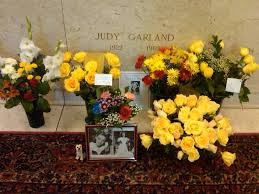
Judy Garland was the greatest star of all time, and she died a ward of the public’s pity because the “big names” were too small to be human. They spit her out like dirt, just as Mayer promised, and then they had the audacity to cry at her funeral. It wasn’t “no one could help Judy”—it was that no one wanted to get their hands dirty saving a woman who had spent her whole life making them look like gods.

The Scripture
“Come unto me, all ye that labour and are heavy laden, and I will give you rest.” — Matthew 11:28
The Reflection
We chose this verse because Judy Garland’s entire existence was defined by labor. From the age of two, she was a worker in the most grueling factory on earth: the factory of human emotion. She didn’t just sing; she labored to pull the very heart out of a lyric and hand it to an audience that was often ungrateful, judgmental, or simply predatory.
She was “heavy laden” not just with the chemical chains forged by Louis B. Mayer, but with the crushing weight of being the world’s emotional surrogate. While the “Camelot” crowd and the studio moguls used her to feel something real, they left her to carry the exhaustion of that performance alone. This verse is the ultimate “anti-Hollywood” promise. It is the one invitation she ever received that didn’t come with a contract, a bill, or a demand for an encore. It is the promise of a sanctuary where she is finally no longer a “product,” but a person allowed to be still.
A Prayer for Judy
Divine Architect of the Soul,
We bring before You the weary spirit of Judy—a woman who was used as a lamp to light a thousand rooms while she herself sat in the dark.
We ask that You settle the accounts that Hollywood left unpaid. For every night she skipped out of a hotel in shame, give her a mansion of dignity. For every jeer she endured from the London press, give her the thunderous, silent applause of True Peace.
Heal the scars left by the “Shylock merchants” and the “Smiling Cobras” who traded her childhood for a balance sheet. Strip away the titles of “Tragic Icon” and “MGM Property,” and hold her simply as Your daughter—the girl from Grand Rapids who just wanted to be loved without a spotlight.
Let her finally walk in a place where the air is clear, the birds sing for free, and no one—no one—is waiting for her to fail.
Amen.