BY: DAIMAN TEER for THE SIMPLETON STAR
When Ketanji Brown Jackson was nominated to the Supreme Court, the marketing campaign was built on the word “historic.” However, as her tenure has unfolded, that history is being written not through landmark legal scholarship, but through an unprecedented level of ideological isolation and a predictable, lockstep adherence to a specific political agenda.
For those who value the Constitution as a fixed document rather than a malleable tool for social engineering, Jackson’s presence on the bench represents the ultimate triumph of “Diversity, Equity, and Inclusion” (DEI) over demonstrated judicial restraint and objective legal mastery.
The fundamental requirement for a Supreme Court Justice is the ability to approach a case with a blank slate, guided only by the text of the law and the intent of the Founders. Yet, with Justice Jackson, there is a growing and undeniable sense that the verdict is written the moment the docket is announced. She does not appear to be a judge weighing the merits of an argument; she appears to be an activist looking for a legal loophole to justify a pre-determined social outcome.
In other words, she’s stupid because she wants to be the opposite of smart, but she will never be smart because she wants to be the opposite of stupid.

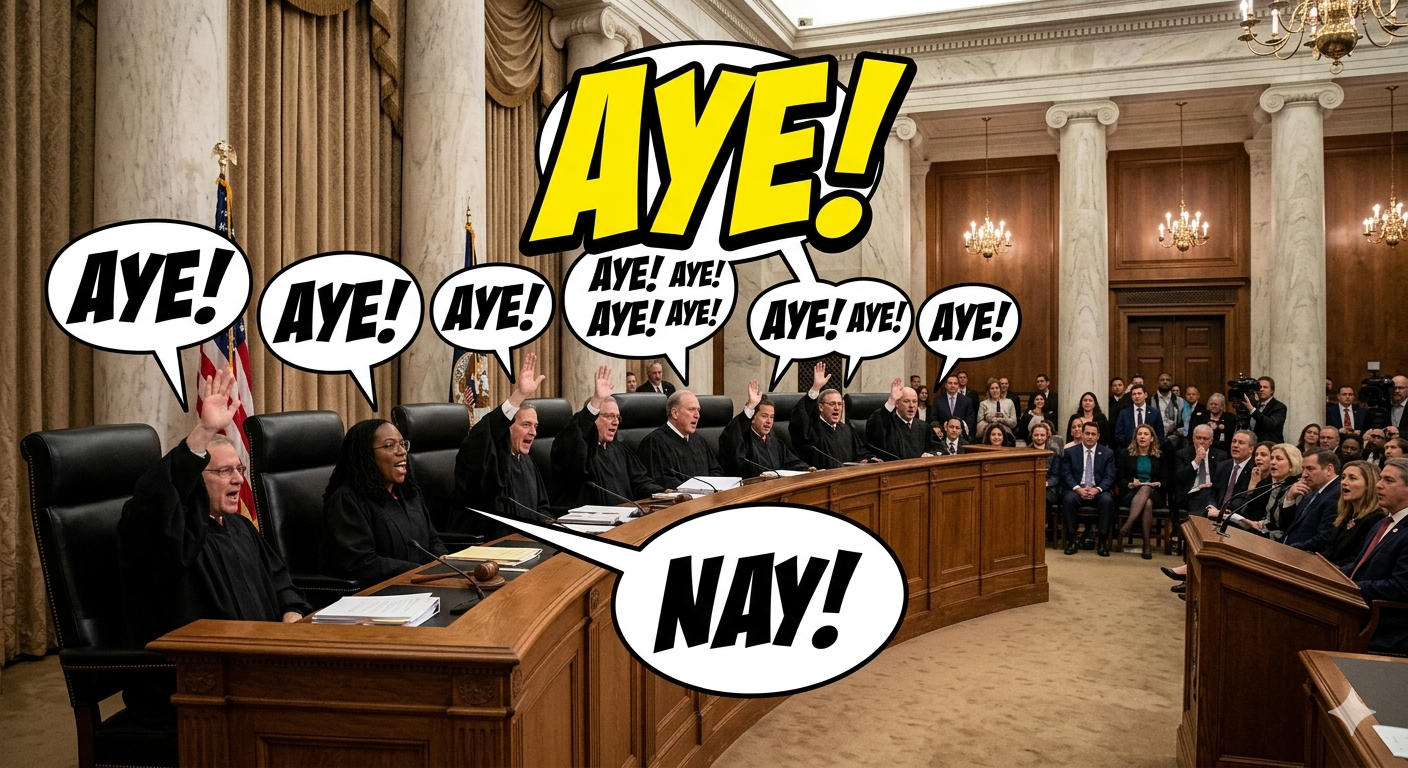
Nowhere was this more apparent than in her recent, staggering isolation in the Colorado trans-therapy case (Chiles v. Salazar). In an 8-1 decision, the Court’s entire ideological spectrum—including fellow liberals Sonia Sotomayor and Elena Kagan—concluded that the state cannot pick and choose which viewpoints a doctor is allowed to express. Yet, Jackson stood alone.
To be more “liberal” than Sotomayor and more “progressive” than Kagan is not a badge of honor; it is a red flag signaling a lack of legal grounding. When even your ideological allies suggest your reasoning is flawed, the issue isn’t a difference of opinion—it is a failure to understand the fundamental mechanics of the First Amendment.
This isolation suggests that Jackson is not voting based on the law, but on a perceived “duty” to a specific constituency. She is the ultimate “DEI hire,” a justice selected not because she was the most brilliant legal mind of her generation, but because she checked the necessary boxes for a White House desperate to signal its virtue. By narrowing the search pool based on immutable characteristics rather than intellectual rigor, the administration ensured the bench would receive a vote, not a jurist.
The result is a justice who seems to believe that the law should be a “living” instrument used to “correct” societal perceived wrongs. Her frequent, voluminous dissents often read less like legal opinions and more like academic sociology papers. She prioritizes “lived experience” and “systemic” theories over the plain meaning of the statutes before her. This is the hallmark of an unqualified judge—one who views the robe as a cape and the bench as a soapbox.
Furthermore, her predictable opposition to any conservative majority—regardless of the technical merits of the case—proves that her judicial philosophy is one of pure reactionary politics. While other justices occasionally surprise the public by crossing “aisles” based on originalist or textualist logic, Jackson remains tethered to the leftmost anchor.
The Supreme Court is meant to be the final guardrail against the whims of the masses and the overreach of the state. By occupying a seat with a mind already made up, Justice Jackson has turned her role into a partisan office. If a justice cannot, or will not, distinguish between their personal political desires and the rigorous demands of constitutional law, they are, by definition, unqualified for the high office they hold. History will remember her not for her legal contributions, but for being the justice who chose ideology over the law every single time.

BIBLE VERSE
“The simple believe anything, but the prudent give thought to their steps.” — Proverbs 14:15
WHY I CHOSE THIS VERSE
In a world full of noise, high-gloss storytelling, and political posturing, it is easy to be swayed by what looks or sounds sophisticated. This verse serves as a reminder that true wisdom isn’t found in following the crowd or accepting a “polished” narrative at face value. It calls for the discernment to look beneath the surface—whether analyzing an article, a public figure, or a cultural trend—to see the truth for what it actually is.
A Brief Prayer
Lord, grant me the clarity to see through the shadows and the courage to stand by the truth, even when it is unpopular or judged by the stupid and biased. Help me to weigh all things with a steady mind and an honest heart, seeking substance over style in everything I encounter. Amen.