BY: DAIMAN TEER for the SIMPLETON STAR
There is a little experiment I would like to conduct with the readers of The Simpleton Star.
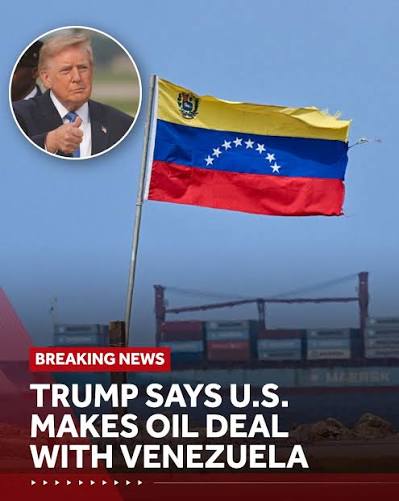
Take a perfectly ordinary news event. The United States makes a deal. The deal gives American companies access to an enormous supply of oil. The deal is designed to revive a devastated Venezuelan petroleum industry, bring American investment into the hemisphere, strengthen American energy security and provide oil for a Strategic Petroleum Reserve that currently sits near a 44-year low. Reuters reported precisely those facts Sunday.
Now ask yourself: What would a normal newspaper headline look like?
Perhaps: “Trump Announces Venezuelan Oil Deal to Strengthen U.S. Energy Security.”
Perhaps: “U.S. Secures Major Access to Venezuelan Oil Reserves.”
Perhaps even: “Trump Deal Opens Vast Venezuelan Oil Reserves to U.S. Investment.”
But this is not a normal newspaper.
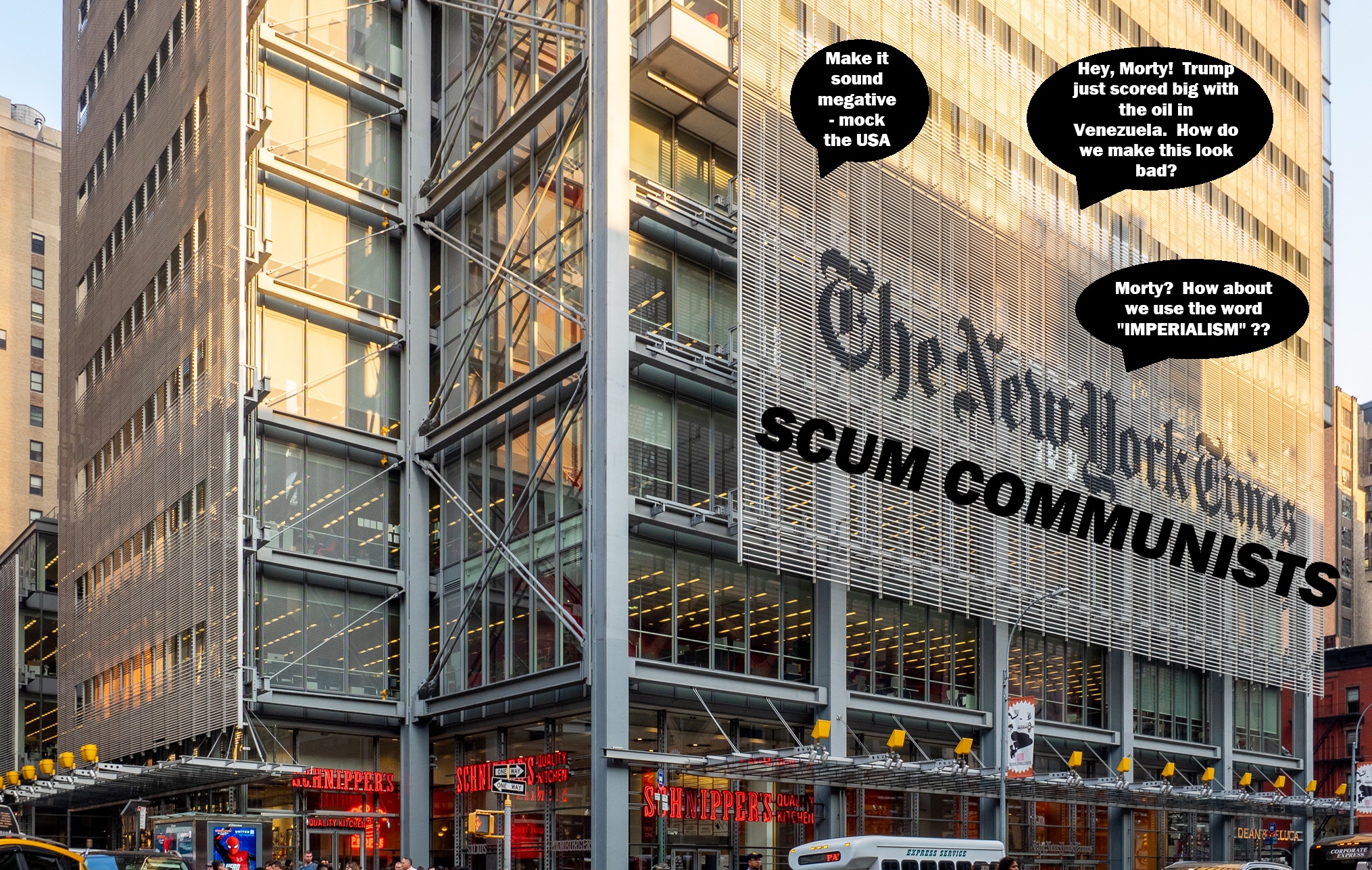
This is The New York Times.
And the headline selected for its readers was:
“A New Form of U.S. Colonialism: Venezuelans Bristle at U.S. Oil Takeover.”
There it is.
Not “American energy security.”
Not “American investment.”
Not “65 billion barrels of proven reserves.”
Not “Strategic Petroleum Reserve.”
Not “Venezuela’s devastated oil industry may finally receive massive investment.”
No.
Colonialism. Takeover.
America is the villain.
Again.
The Times could have reported the Venezuelan objections without turning the headline itself into a prosecutorial indictment of the United States. It could have said that some Venezuelans oppose the arrangement. That would be journalism. Instead, it selected the most inflammatory characterization available and placed it above the fold like a political placard.
And this is where the Times’ defenders will say, “But that’s what Venezuelans are saying!”
Fine.
Then quote them in the story.
But headlines are not assembled by dumping every available adjective into a blender. Editors decide what the reader sees first. They decide what emotional frame accompanies the facts. And when the first thing an American reader is told about an enormous American strategic and economic deal is “U.S. Colonialism” and “Oil Takeover,” the editorial framing is not exactly subtle.
Imagine, for a moment, that the roles were reversed.
Imagine a foreign country had somehow secured a massive energy agreement benefiting its own citizens. Imagine its newspaper celebrated the achievement. Would The New York Times headline the story:
“Foreign Nation Secures Energy Security in Historic Deal”?
Or would we be reading about exploitation, inequality, environmental injustice, corruption, oligarchs, colonialism, human rights and the oppressed?
You already know the answer.
And this is why my favorite hypothetical headline remains the one I have been using for years:
“TRUMP UNIVERSITY CURES CANCER — BUT DENIES CANCER CELLS THEIR REPRODUCTIVE RIGHTS.”
That is the joke.
The joke is that the achievement itself would never be permitted to remain an achievement. It would have to be translated through the ideological machinery first.
A cancer cure would become a reproductive-rights controversy.
An economic victory would become an inequality story.
A military victory would become an imperialism story.
An energy victory becomes colonialism.
A border-security measure becomes cruelty.
An American assertion of power becomes evidence that America is abusing power.
Eventually you begin to wonder whether the newspaper is capable of describing an American success without first apologizing for it.
And before somebody screams that this is “anti-journalism,” let’s be clear about something: I am not arguing that every criticism of the United States is anti-American.
America deserves criticism.
America has made mistakes.
American presidents have made mistakes.
American corporations have made mistakes.
American soldiers have made mistakes.
American citizens have made mistakes.
That is what free countries do: they argue about themselves.
But there is a difference between criticizing your country and instinctively portraying your country as the guilty party whenever it exercises its strength.
The distinction matters.
The Venezuelan oil deal is complicated. Reuters itself notes that many details remain unclear and that substantial investment and infrastructure work will be required before Venezuela can dramatically increase production. The Associated Press likewise reports that critics view the agreement as exploitative while supporters regard it as a path toward economic recovery. Those are legitimate facts and legitimate arguments.
But notice what happens when the Times chooses its frame.
America doesn’t merely obtain access to Venezuelan oil.
America takes over Venezuelan oil.
America isn’t expanding its influence.
America is practicing colonialism.
The distinction is enormous.
Words matter.
A newspaper doesn’t have to print “America is wonderful” to demonstrate patriotism. But neither should it reflexively portray American power as something sinister.
There is a reason the United States possesses the ability to project power around the world: because generations of Americans built an extraordinarily powerful country.
That power can be abused. It can also be used successfully.
And when American power produces something beneficial, there should be no journalistic requirement to hide the benefit beneath three layers of moral condemnation.
The Times may respond that it is merely holding power accountable.
Good.
Hold it accountable.
But then hold everyone accountable.
If Venezuela benefits from American investment, say so.
If Venezuelan workers get jobs, say so.
If Venezuelan government revenues increase, say so.
If American consumers eventually benefit from greater oil supplies, say so.
If the Strategic Petroleum Reserve is replenished, say so.
And if the arrangement is legally questionable, financially risky or politically corrupt, say that too.
That’s journalism.
But if the newspaper’s first instinct is to describe an American strategic victory as colonialism, perhaps the problem isn’t that Americans have become too sensitive to criticism.
Perhaps Americans have simply noticed the pattern.
And perhaps the most revealing question isn’t whether The New York Times “hates America.”
Maybe that’s too crude.
The more interesting question is this:
Why does an institution that exists in America so often seem more comfortable explaining why American power is morally suspect than explaining why American power might actually be good for Americans?
That is the question worth asking.
Because a country cannot survive indefinitely if its own cultural institutions teach its citizens to regard their nation’s strength as something shameful.
America does not need a newspaper that worships the president.
It needs newspapers that remember which country they are writing for.
There is a difference.
And that difference has become increasingly difficult to find on the pages of The New York Times.

THE VERSE
“If the foundations be destroyed, what can the righteous do?” — Psalm 11:3
WHY I CHOSE THIS VERSE
That verse is appropriate here because foundations are rarely destroyed all at once. They are weakened gradually. A word here. A characterization there. A constant suggestion that patriotism is primitive, that national sovereignty is suspect, that American strength is inherently threatening, that American prosperity is somehow morally embarrassing. Eventually, people stop believing their own country is worth defending. That is how foundations crumble. And that is why the language matters.
A PRAYER FOR THE REPUBLIC
Lord, give us the wisdom to criticize our country without despising it, the courage to defend it without worshiping it, and the honesty to recognize both its failures and its extraordinary achievements. Protect the United States from those who would destroy its foundations from within and from those who would destroy it from without. Give our journalists the courage to tell the truth even when the truth does not fit their politics. Give our leaders the wisdom to use American power responsibly and the strength to use it when American interests and American security require it. And give ordinary Americans the clarity to recognize the difference between legitimate criticism and contempt disguised as journalism.
May we never become ashamed of the country that gave us the freedom to argue about it.
Amen.